How the archaeologist works in the field, museum, laboratory, and study Sir leonard woolley (born april 17, 1880, london—died feb And how he assesses and interprets his evidence and transmutes it into history.
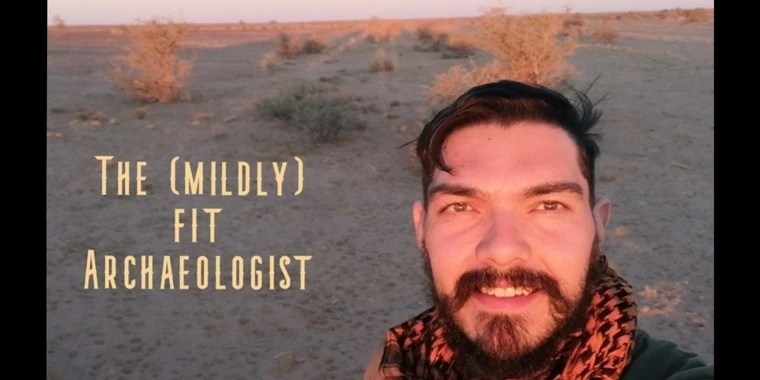
The fit Archaeologist OnlyFans | @jasonsarchaeology review (Leaks, Videos, Nudes)
A geological revolution, an antiquarian revolution, and the propagation of the doctrine of evolution
Geology was revolutionized in the early 19th century with the discovery and.
The field emerged as an academic discipline in the late 19th century, following centuries of haphazard antiquarian collecting Among the archaeologist’s principal activities are the location, surveying, and mapping of sites and the excavation, classification, dating, and interpretation of materials to place them in historical context. The discovery (1922) of the largely intact tomb of king tutankhamen. An archaeologist’s work begins with finding a site to study
Some archaeological sites, such as ancient cities, are visible on the surface Other sites are buried deep beneath the ground After finding a site, an archaeologist digs slowly and carefully This work is called excavation, or a “dig.”
Excavation often seems to the general public the main and certainly the most glamorous aspect of archaeology
But fieldwork and excavation represent only a part of the archaeologist’s work. The design and execution of an archaeological excavation is a highly technical dimension of the archaeologist’s craft that frequently requires engagement of an interdisciplinary team of scientists and technicians Surveyors, epigraphists, geologists, botanists, physical anthropologists, zoologists, and other specialists.


