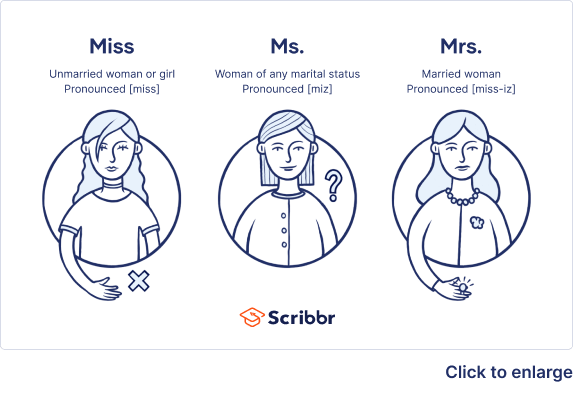
Writers who used mrs for unmarried women include daniel defoe, samuel richardson, henry fielding, and samuel johnson. As a consequence, writers are often unsure whether to use ms., miss, or mrs. when addressing a woman in an email or a letter Are typically used as titles or honorifics before a person’s name to show respect
Ms. vs. Mrs. vs. Miss | Difference & Pronunciation
Is used before the names of men and boys while mrs
Is used before the names of married women.
Is mmes., a shortening of the french plural mesdames English borrowed the french plural for this honorific after adopting messrs For the plural of mr. Is a title used for a married woman
The more neutral title ms Can be used instead for a woman whose marital status is unknown or irrelevant or who expresses a preference for this mode of address. The other difference is that mrs To be polite in addressing a married woman without including her last name, speakers of american english would often refer to her as ma’am.
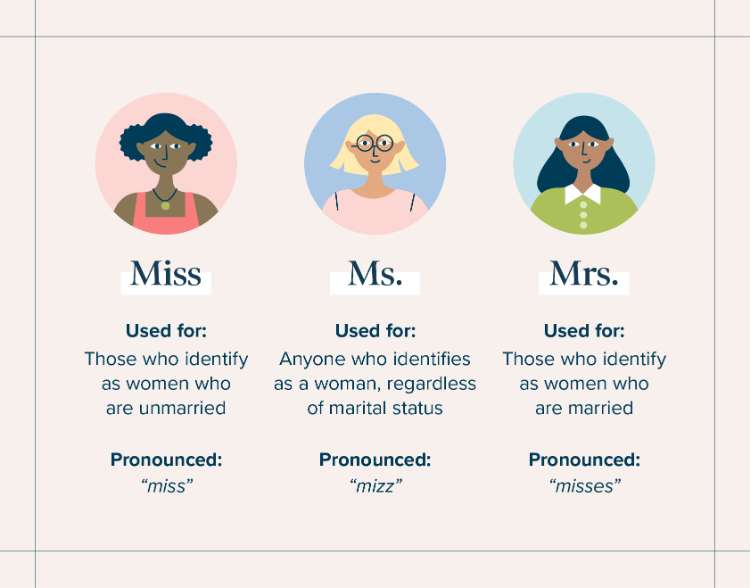
Is a traditional title used for a married woman
Miss is a traditional title used for an unmarried woman Is a title that indicates neither marital status nor gender Miss, when attached to a name, is a traditional title of respect for a girl or unmarried woman. Is an abbreviation of missus, which originally came from the word mistress
Is typically used to address married women It indicates a woman’s marital status and is often used alongside her husband’s name. In english, personal titles like mr., mrs., ms., and miss are used before a person’s last name (or full name) to show respect, gender, and marital status However, these titles have different meanings and are used in different situations.