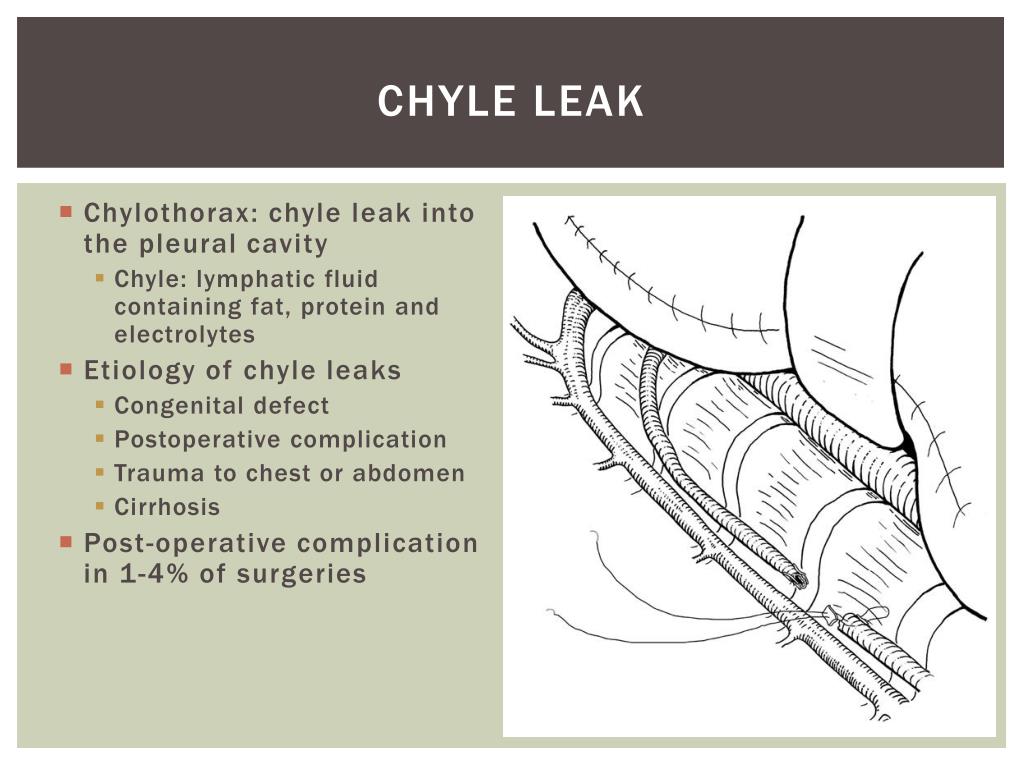
Lymphatic vessels become damaged, allowing chyle to leak into nearby organs Chyle leak is a rare but serious condition that requires prompt diagnosis and effective management strategies Chyle leaks can cause problems with wound healing and getting adequate nutrition
Pediatric Case Study By Sarah Iske Elliot Hospital
Healthcare providers typically treat chyle leaks with dietary changes
Postoperative chyle leak is a rare but serious complication of head and neck surgery
Chyle leak can lead to a systemic metabolic imbalance, a prolonged wound healing and longer hospital stay Early identification and treatment are crucial for good. Learn about chyle leak, its causes, symptoms, and effective treatments Explore diagnostic methods, management strategies, and dietary tips to improve quality of life.
Introduction chyle leak is a rare but clinically significant condition that arises when chyle—a milky bodily fluid rich in lymph and fats—escapes from the lymphatic system into adjacent anatomical spaces Most commonly encountered as a postoperative complication in thoracic, abdominal, or neck surgeries, chyle leak can also occur due to trauma or underlying pathological processes Eating well when you have a chyle leak what is chyle Your body makes a fluid called chyle in the small intestine when it digests foods
Chyle is made up of fat that we eat, important proteins, and white blood cells.
Symptoms and management options postoperative complications can significantly impact recovery This condition involves the leakage of lymphatic fluid, often due to damage to the thoracic duct, a key vessel in the lymphatic system


