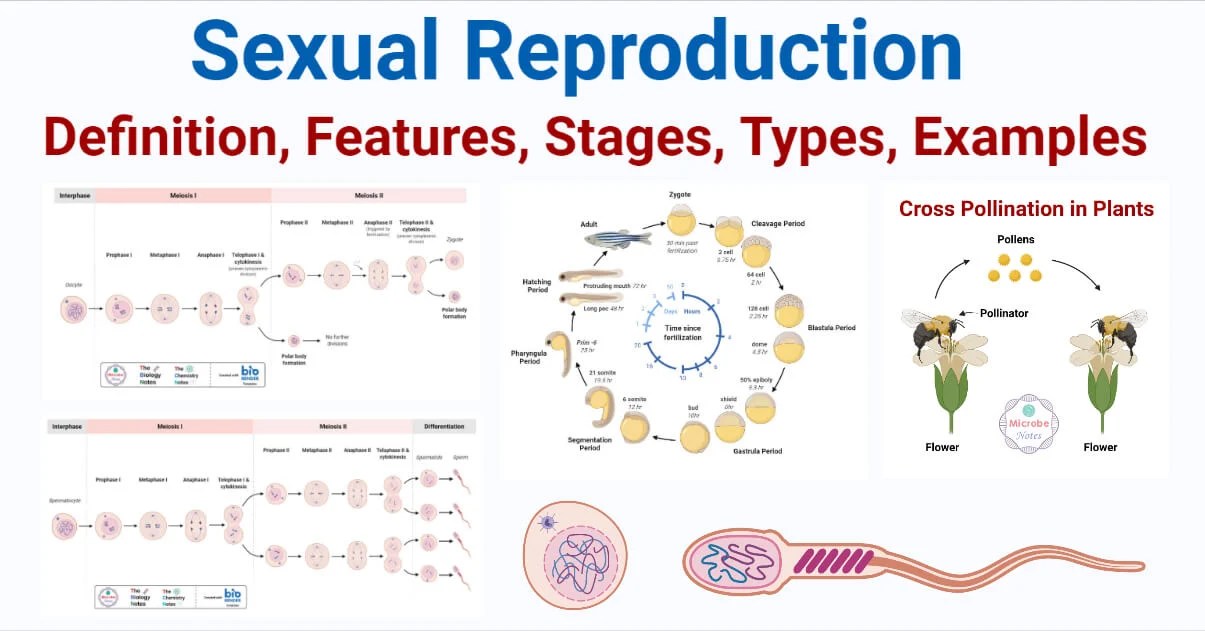
In most species the genetic information is carried on chromosomes in the nucleus of gametes, which then unite to form a diploid zygote Asexual reproduction living things use lots of different strategies for producing offspring, but most strategies fall neatly into the categories of either sexual or asexual reproduction The zygote develops into a new individual.
Reproduction In Humans
Sexual reproduction is a type of reproduction that involves a complex life cycle in which a gamete (haploid reproductive cells, such as a sperm or egg cell) with a single set of chromosomes combines with another gamete to produce a zygote that develops into an organism composed of cells with two sets of chromosomes (diploid)
[1] this is typical in animals, though the number of chromosome sets.
Sexual reproduction was an early evolutionary innovation after the appearance of eukaryotic cells The fact that most eukaryotes reproduce sexually is evidence of its evolutionary success In many animals, it is the only mode of reproduction And yet, scientists recognize some real disadvantages to sexual reproduction
On the surface, offspring that are genetically identical to the parent may. Sexual reproduction is the type of reproduction where offspring are produced from the fusion of male and female gametes. Sexual reproduction occurs when the sperm from the male parent fertilizes an egg from the female parent, producing an offspring that is genetically different from both parents.